Schools and Colleges in North Cyprus (2026): Why International Families Choose Them

For families moving to North Cyprus, the first question is often not the house but the school. The good news is that the island has a strong choice of English-medium private schools and colleges, from British-curriculum schools that prepare pupils for GCSE, A-Level and the IB Diploma to well-established bilingual colleges. Classes are small, campuses are safe and green, and the school day fits easily into a relaxed Mediterranean family life. Here is why schools and colleges in North Cyprus are such a good choice for international families, and how to plan your home around the right one.
1. British and international curricula your children already know
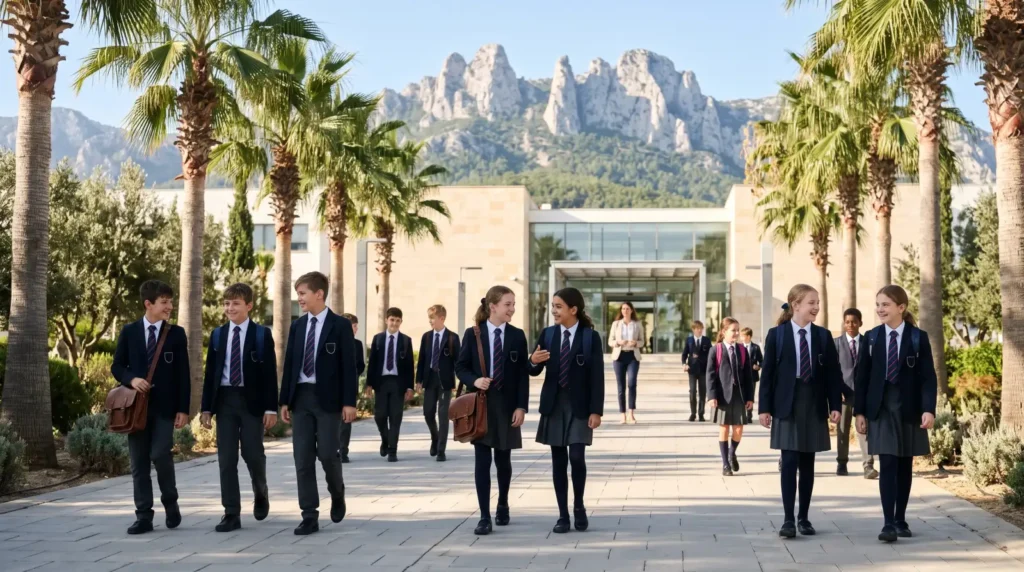
Several schools follow the British system, which makes moving from the UK or another international school simple. The English School of Kyrenia, founded in 2008, teaches pupils aged 2 to 18: its primary years follow the Cambridge International Primary programme, secondary pupils take GCSE and IGCSE exams, and the sixth form offers a choice between the IB Diploma and A-Levels. Necat British College follows the English National Curriculum and has campuses in Nicosia and in Alsancak, west of Kyrenia. In Nicosia, Levent College in the Ortaköy district is a member of the European Council of International Schools and a registered examination centre for Cambridge and Edexcel.
2. Qualifications that open doors worldwide
GCSE, IGCSE, A-Level and the IB Diploma are recognised by universities around the world, from the UK and Germany to the Netherlands, Canada and Australia. A child who finishes school in North Cyprus can apply to universities abroad with exactly the same qualifications as a pupil in London, or continue at one of the English-medium universities on the island.
3. Small classes and personal attention
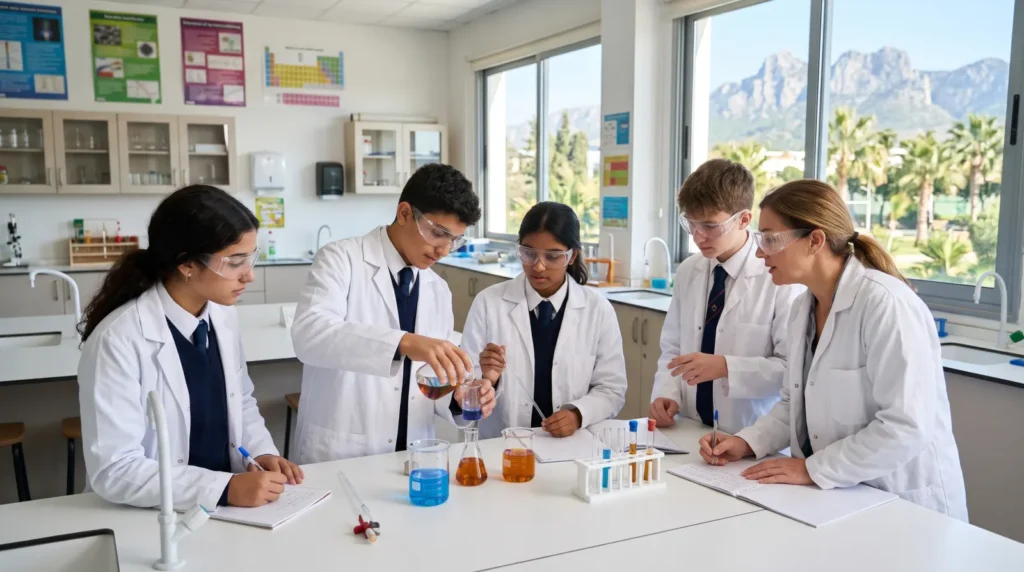
Private schools in North Cyprus usually keep classes small, so teachers know every pupil well. Children who join from abroad, sometimes with little English or a different school system behind them, get the attention they need to settle in quickly.
4. A truly international school community
Classmates come from Britain, Germany, Turkey, Scandinavia, Russia, Iran and many other countries. Children grow up bilingual or even trilingual, learn to work with people from different cultures and make friends from all over the world, an advantage that stays with them for life.
5. Safe campuses and an outdoor childhood
North Cyprus is a calm, family-oriented island with a low crime rate. School campuses are green and secure, and after school children play outside, swim in the sea, join sailing or football clubs and spend weekends on the beach or in the mountains. Many parents say their children are healthier and more independent after moving here.
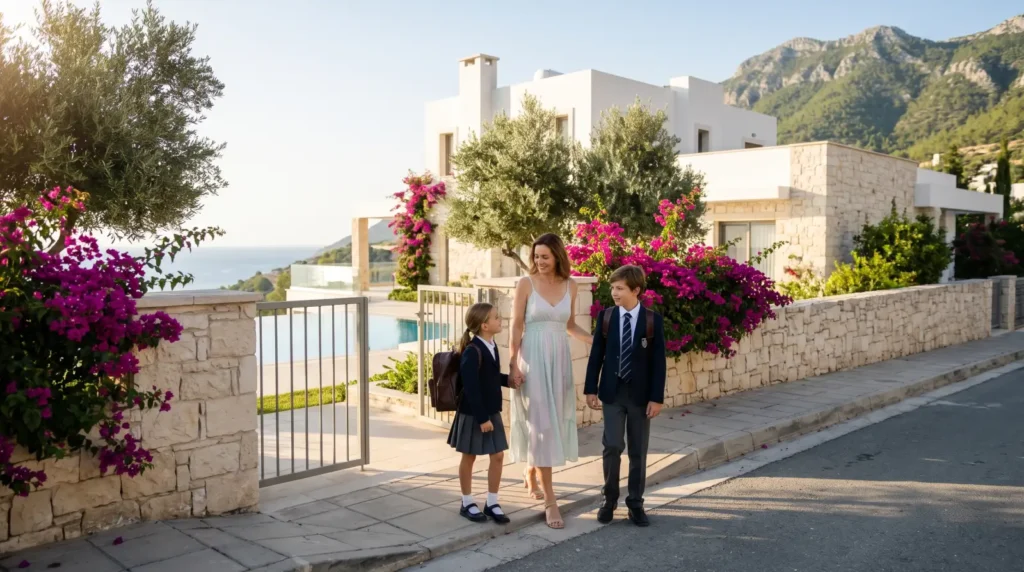
6. From nursery to university on one island
Families can plan the whole journey in one place: nursery and primary school, secondary school and sixth form, and then an English-medium university such as Eastern Mediterranean University, Near East University or Cyprus International University. Read more in our guide on studying in North Cyprus as a European student.
7. Choosing the school first, then the home
The school run shapes daily family life, so most parents choose the school first and then look for a home within a short drive. Kyrenia’s west coast, around Alsancak and Lapta, is the easiest choice for British and international schooling; Nicosia suits families who prefer the colleges of the capital; and Famagusta is ideal for families with older children heading to university. Our guide to the best family-friendly areas in North Cyprus compares schools, safety and homes area by area, and you can browse current homes in Kyrenia or all our properties.
8. Residency for the whole family
Buying a home can also bring long-term residency. Under the 2026 rules, a property with a title deed worth at least £300,000 can lead to a 10-year residence permit, which gives a family a stable base for the children’s school years. Our North Cyprus golden visa guide explains the conditions, and the step-by-step buying guide shows the legal process.
Frequently asked questions
Are there British-curriculum schools in North Cyprus?
Yes. The English School of Kyrenia offers Cambridge Primary, GCSE/IGCSE and a choice of IB Diploma or A-Levels, and Necat British College follows the English National Curriculum in Nicosia and Alsancak.
Is there an IB school in North Cyprus?
Yes. The sixth form of The English School of Kyrenia offers the IB Diploma as well as A-Levels.
Which area is best for families with school-age children?
Kyrenia’s west coast around Alsancak and Lapta is the most popular choice for British and international schooling, while Nicosia suits families who prefer the colleges of the capital.
Can schooling in North Cyprus lead to universities abroad?
Yes. GCSE, A-Level and IB Diploma results are accepted by universities worldwide, and pupils can also continue at the English-medium universities on the island.
Conclusion
Recognised British and international curricula, small classes, safe green campuses and an outdoor Mediterranean childhood make schools and colleges in North Cyprus an excellent choice for international families. When you have chosen the school, talk to our team, we will show you homes within an easy drive of it.